Journey to the South pt. 2 - Gee’s Bend
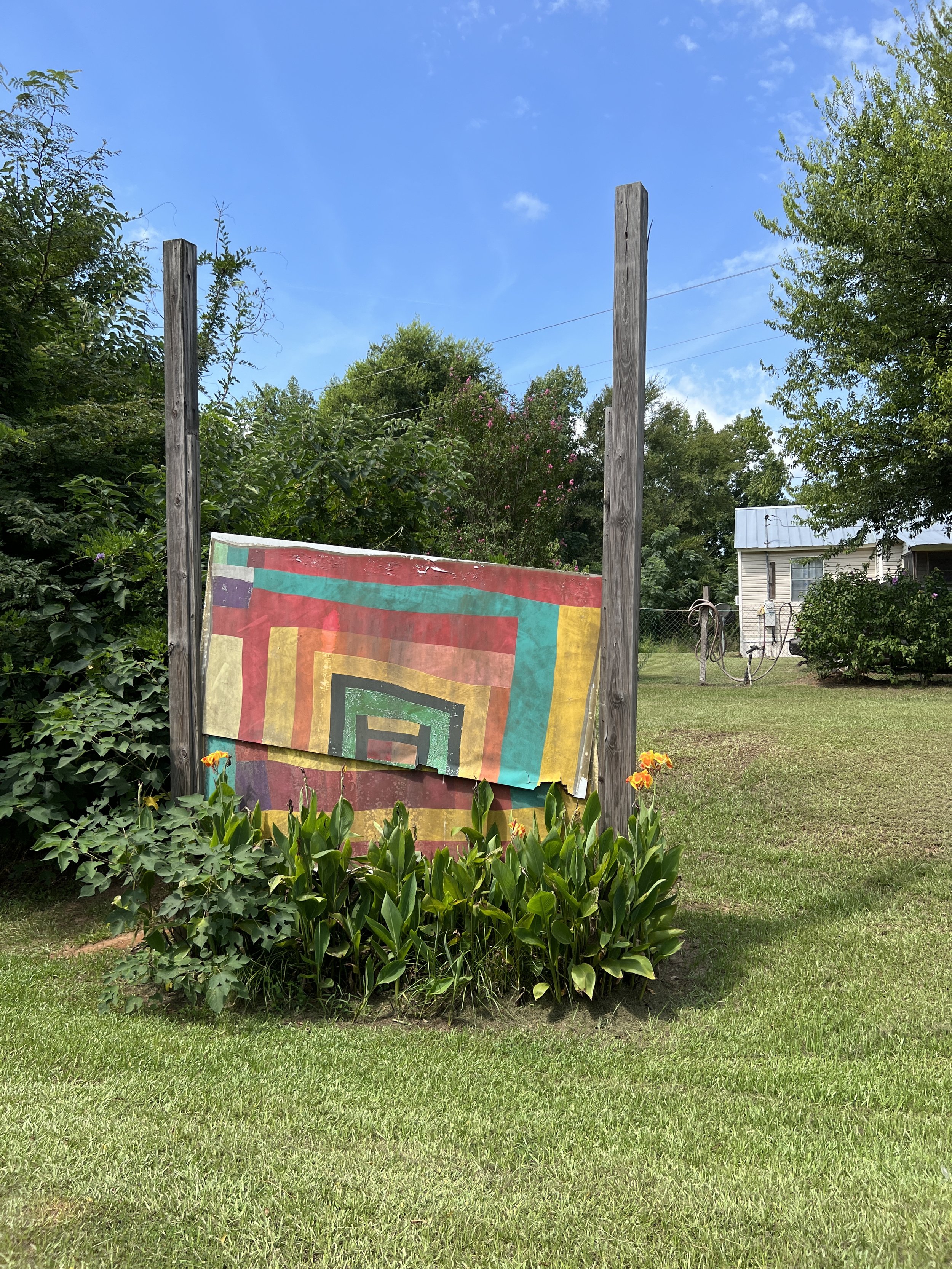
Yard quilt, Gee’s Bend.
My travels to the south didn’t stop at Florence, Alabama and The School of Making. When the workshop finally ended, and I realized I needed to move on I was beyond sad - I had experienced something incredible, and had finally achieved a years long dream of making it to the home of Alabama Chanin. I packed my bags reluctantly. I attempted to stay an extra day. I had come to love Florence. Alas, my Airbnb had already rented to its next guest, and I needed to be on my way. The truth is, as enchanting as my experience at Alabama Chanin had been, it was not the only dream I was chasing. My next stop in Alabama would be taking me to Gee’s Bend, legendary for its quilts and quilters alike. Gee’s Bend quilts have always been a subject of personal interest to me - primarily made during the Great Depression, they reflect the ingenuity of their makers with limited means. My own grandmother experienced her childhood during the Great Depression and the few photos I have of her and her sibling feature a family clothed in dresses made from feedsacks, and this family history has greatly influenced and inspired me to learn as much as I can about the textiles from this time. The journey to Gee’s Bend was much more difficult to plan and took real research, conversations and dogged interest to make happen, but I had a meeting scheduled for the next day with one of the quilters, and I knew this would be the opportunity (and trip) of a lifetime.
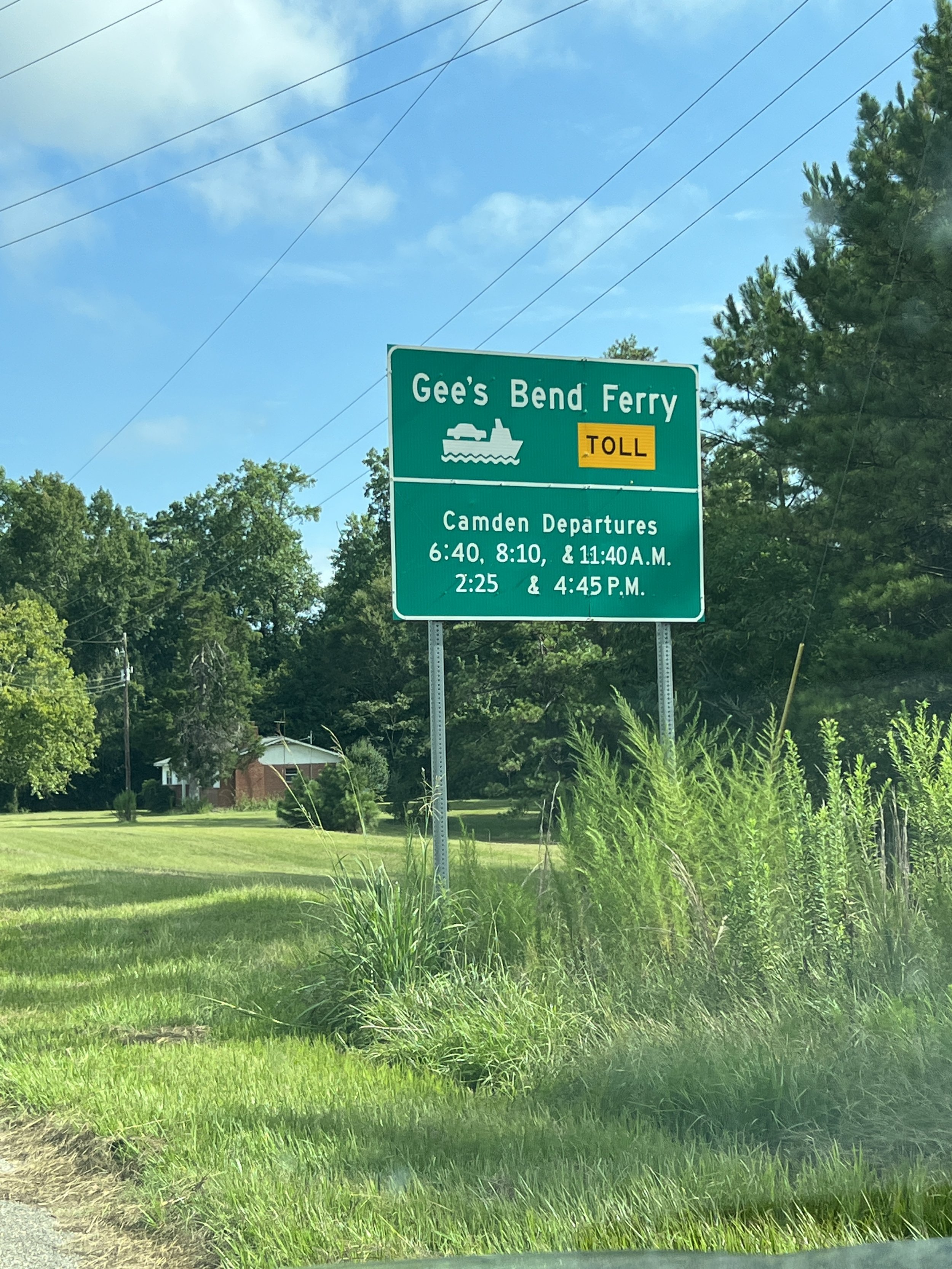
I packed my bags again, loaded up the car and set off. If you’ve read part one, you already know this was my first solo trip and it wasn’t my only destination. I made a new reservation to stay overnight (last minute, very worrisome, not sure if I would recommend last minute travel plans but it all worked out!) and set my GPS to Camden, Alabama. Throughout my drive I was able to see all the beauty of Alabama’s landscape - its lush, rolling hills and bright skies. My trip was four and a half hours, and I would be driving part of that journey into the night.
When I finally arrived just before midnight, my host greeted me most graciously (she and her husband had stayed up waiting for me), and showed me to my suite. I was staying in the bedroom belonging to the mistress of the home, with a private staircase to the nursery above. On the elegant bed was spread a quilt. My heart was content; I knew I had arrived in just the right place.
The next day I set out, hand drawn map in hand. Without question I knew I had arrived. Gee’s Bend is a community, and at its center is the Gee’s Bend Quilt Collective. The houses surrounding it each feature some form of quilt or reference to their makers - a plaque here, a painted quilt there, a patchwork door that proudly announces this is the epicenter of quilting. I knocked and entered - and was immediately welcomed into the modern center for Gee’s Bend quilters.
Gee’s Bend is not far from Camden, Alabama but it is far enough out of reach and recessed by its own geography to have become isolated. This separation from society - its utter position in rural America, and the history of enslavement and segregation tied to its geographical location is part of what contributed to the magic of Gee’s Bend quilters. It is accessible by road if you know how (and I was lucky enough to get directions) and by ferry if you don’t (adding to the legend of its isolation). This isolation and lack itself - of resources, of accessibility, of rights, freedom and equality - in combination with the unparalleled skill of the makers and their instinctual resourcefulness is part of the formula of what distinguishes Gee’s Bend quilts from any other. Renown for creating compositions from scraps, these quilts are a masterclass in sustainability; created primarily during the Great Depression and afterward, these quilts exemplify “making do” and yet go so much farther. In their hands, sustainability in the form of quilting became art.
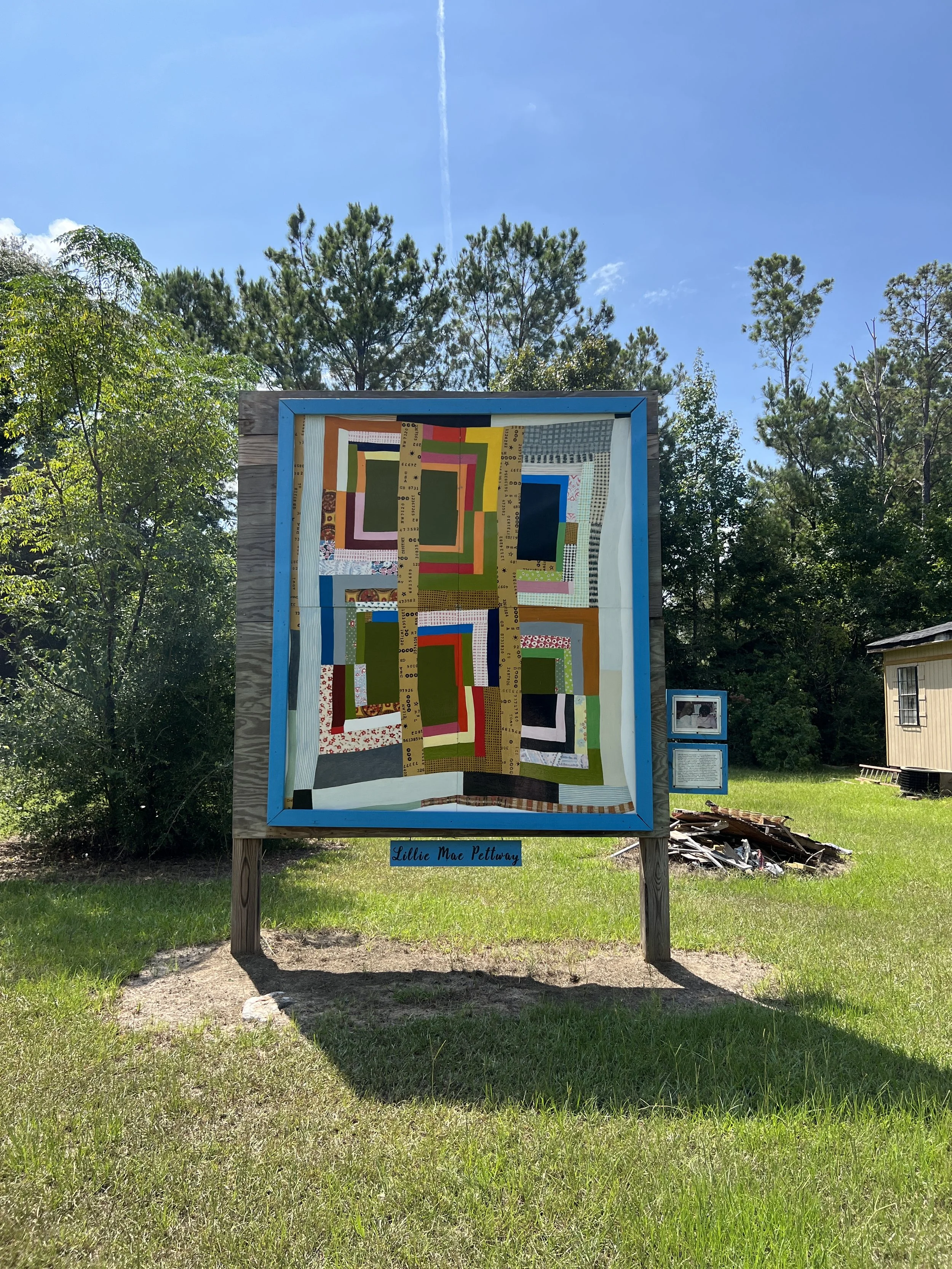
Tribute to Lillie Mae Pettway, Gee’s Bend.
When you think about the quilters of Gee’s Bend, a word continuously comes to mind: remarkable. It was remarkable that in an isolated region and with limited resources, in a historically Black and segregated community in southern Alabama, a group of women makers would hone their talent, craft and resourcefulness to create quilts now installed in museums worldwide. Remarkable is that the name of Pettway has as much prominence as Rothko, each painting in their own style, with their works displayed in museums worldwide. Remarkable, that now I was able to step into a permanent home for the maker’s to gather, stitch, and story tell through cloth together.
Gee’s Bend Quilt Collective
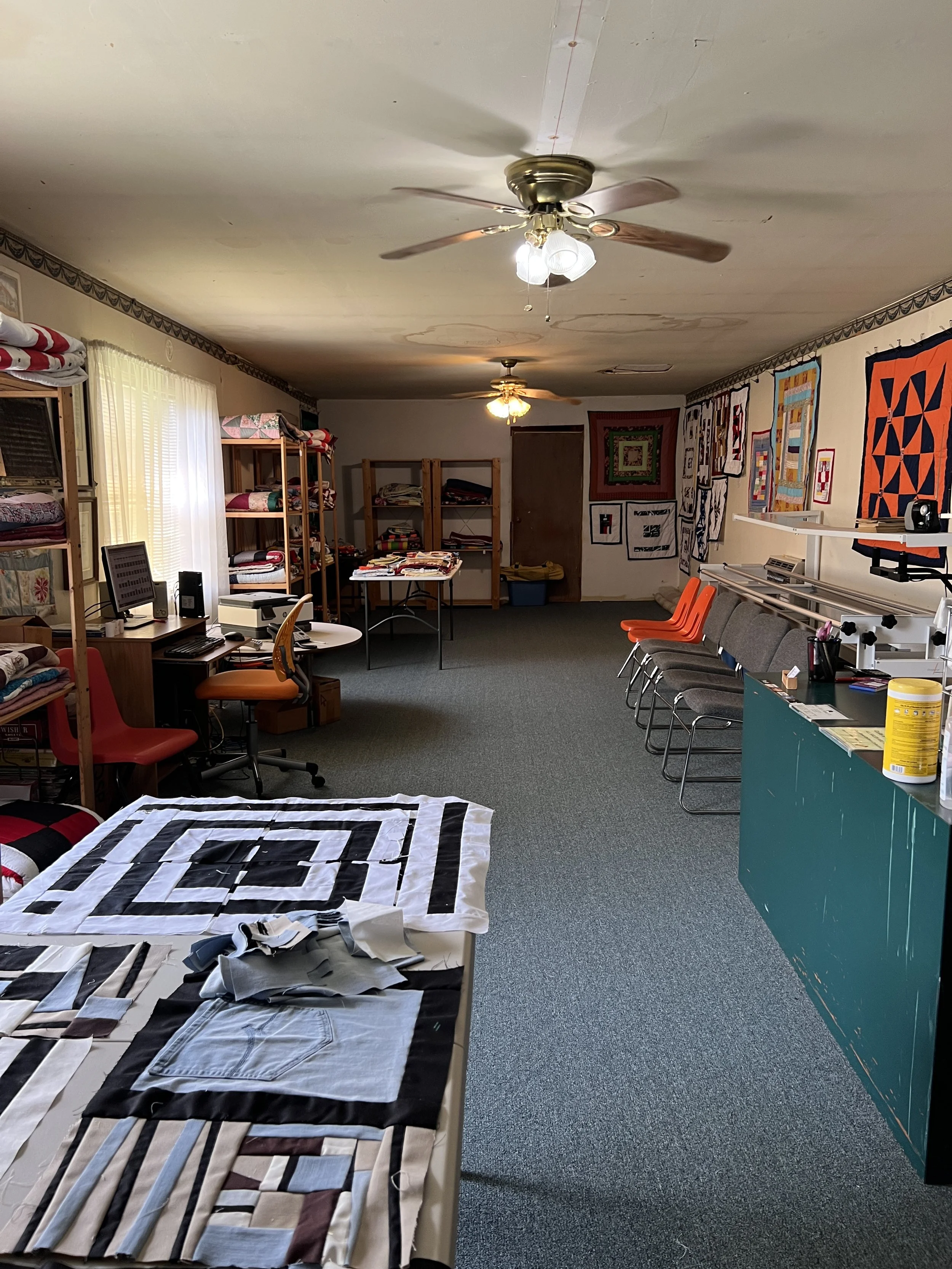
Inside the Quilt Collective, I was immediately drawn to the textiles and in progress quilting scattered throughout. In a nod to modern scraps and repurposing material, I saw bits of jeans reworked into patchwork, and strong quilt blocks built in the composition of color blocking. These current pieces acknowledged the past, but definitely established themselves as representing the abundance of material available today. On the walls hung calendars, framed photos, and posters of the masterpieces that came before. I knew I stood in a place that magic had touched - and yet I looked around further. The building that so reveres its history as being a home to quilters is slowly becoming dilapidated, with water damage clearly affecting the roof and interior ceiling. The practice of sustainability is alive and well - but now fast fashion jeans with spandex threads are used in the place of all cotton denim, creating a distortion of the quilt block shape it should structure. An old tv with a fuzzy picture drones on in the background. Magic has certainly been here, but the culture of the present is reinforced in various corners of the room; it reveals itself in how things aren’t mended so cleanly, or the loss of quality of the fibers in which we clothe ourselves.
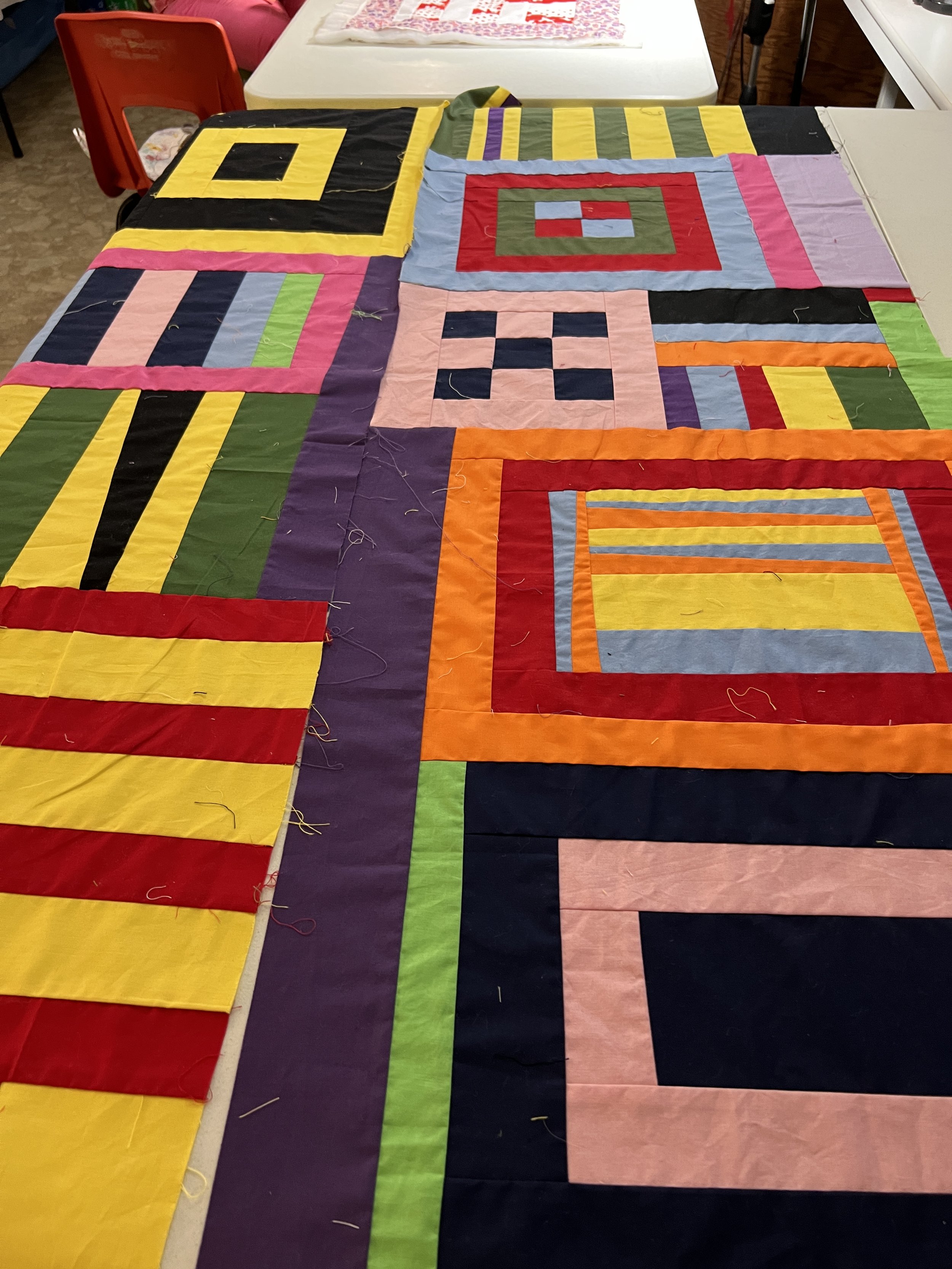
In progress modern quilt blocks; Gee’s Bend.
I left Gee’s Bend with many thoughts. It was wildly different from my experience at Alabama Chanin, and I always knew it would be. Alabama Chanin is a destination for the well-heeled who can afford to journey to the south, and experience the luxury of purchasing handmade clothing whose origin can be traced to the cotton field the fiber was grown in. Gee’s Bend is not that, and it never has been. It is rooted in community, and its history is carried by the descendants of those who made it famous. The legacy of the quilters endures, and will continue to do so as long as its famous quilts adorn the hallowed halls of museums, and as long as the makers continue to piece their compositions together. This experience was not solely about the destination for me. It truly was a journey: through a part of the country I had never traveled to, to understand the context and history of quilt making, and to discover what fuels me as a maker.